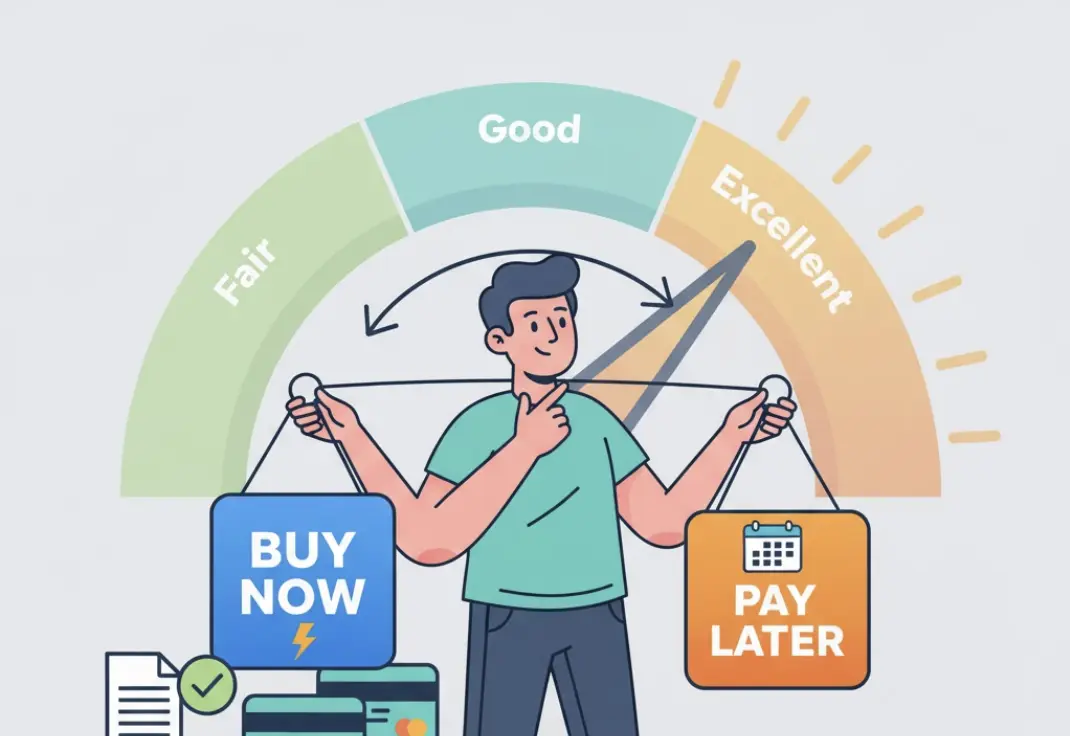
If you’ve ever clicked “Buy Now, Pay Later” instead of pulling out your card, you’re not alone — millions of Americans are doing the same. But here’s the million-dollar question: does BNPL help or hurt your credit score in 2025?
Here’s the short answer: BNPL can help your credit if you use it wisely — but one late payment can still sting. Let’s break down what’s really happening behind those friendly “split into 4” buttons and what it means for your financial health.
🛍️ What Is Buy Now, Pay Later (BNPL)?
Think of Buy Now, Pay Later as a short-term mini-loan disguised as a checkout option. You buy something today, pay a small portion now, and spread the rest over several weeks — usually with zero interest if you stay on schedule.
Popular BNPL platforms like Affirm, Klarna, Afterpay, and PayPal Pay Later have made it easier than ever to split purchases. But in 2025, the convenience comes with a twist — your BNPL habits are starting to show up on your credit report.
📈 How BNPL Works in 2025 (and What’s Changed)
Until recently, BNPL was a bit of a gray zone in the credit world — convenient, low-commitment, and invisible to lenders. Not anymore.
In 2025, the Consumer Financial Protection Bureau (CFPB) and major credit bureaus — Experian, Equifax, and TransUnion — rolled out clearer reporting rules to make BNPL activity more transparent.
Here’s what’s new this year:
| Update | What It Means for You |
|---|---|
| Credit Reporting Expansion | More BNPL providers now report both on-time and missed payments. |
| Soft vs. Hard Checks | Short-term BNPL plans use soft checks (no score hit). Long-term plans may trigger hard inquiries. |
| Typical Terms | Four equal payments over six weeks, or extended plans of 6–12 months. |
| Credit Integration | Experian’s “BNPL Bureau” now feeds your repayment data into FICO® and VantageScore® models. |
💡 OptipWealth Insight:
“BNPL isn’t just a payment option anymore — it’s part of your credit identity. Treat it like a loan, because lenders already do.”
📌 BNPL Quick Definition Box
Buy Now, Pay Later (BNPL) is a short-term financing option that lets you make a purchase immediately and repay it in installments — often interest-free if you pay on time.
It’s great for managing cash flow, but because it’s a real credit obligation, missed payments can affect your credit score and financial reputation.
💚 The Benefits of BNPL
- Interest-Free Flexibility – Most short-term plans charge no interest if you pay on time.
- Easier Budgeting – Great for spreading out large or seasonal expenses.
- Potential Credit Boost – Positive payments may now count toward your credit history.
- Fast Approvals – Quick sign-ups with minimal eligibility requirements.
⚠️ The Risks You Shouldn’t Ignore
- Hidden Debt Stack – Multiple small BNPL loans can quietly snowball into big obligations.
- Late Fees & Score Impact – Missed payments can lead to penalties and credit score drops.
- Inconsistent Reporting – Some lenders report to bureaus; others don’t.
- Impulse Spending Trap – Easy approval can make “want” feel like “need.”
💬 OptipWealth perspective:
“The biggest BNPL danger isn’t interest — it’s invisibility. People forget it’s real debt until all four payments hit at once.”
💡 How to Use BNPL Smartly in 2025
✅ 1. Choose Reputable Providers
Stick to well-established platforms like Affirm, PayPal, or Klarna. They’re more transparent and follow CFPB reporting rules.
✅ 2. Check If Payments Are Reported
If your goal is to build credit, make sure your provider reports your positive payments.
✅ 3. Automate or Set Reminders
BNPL bills are often smaller and easier to forget. Automation prevents missed payments.
✅ 4. Limit Open Plans
Having more than 2–3 active BNPL loans can complicate your budget and hurt your credit utilization.
✅ 5. Track Spending Like Credit
Treat BNPL like a credit card balance — because financially, that’s what it is.
💼 OptipWealth ProTips
- ProTip #1: BNPL isn’t a shortcut — it’s a micro-loan. Treat it with the same respect as a credit card.
- ProTip #2: If rebuilding credit, prioritize BNPL providers that report to bureaus (Affirm and Zip started limited reporting in 2025).
- ProTip #3: Never borrow more than you can repay in your next paycheck cycle.
- ProTip #4: Consistency wins — a clean, on-time BNPL record can subtly strengthen your overall credit profile.
❓ BNPL FAQs
Does BNPL affect my credit score?
Yes. As of 2025, more BNPL providers report payments — good and bad — to credit bureaus.
Is BNPL better than using a credit card?
Not always. Credit cards offer better rewards and fraud protection, but BNPL can be cheaper for short-term purchases.
Can BNPL help build credit?
Only if your provider reports your on-time payments to credit bureaus.
What happens if I miss a BNPL payment?
You may face late fees, and your credit score could dip if reported.
Will BNPL replace credit cards?
Unlikely. BNPL is a complement, not a replacement. It’s great for managing short-term purchases — not long-term borrowing.
🧭 OptipWealth’s Take
BNPL has matured — it’s no longer just a friendly button at checkout. It’s a real credit tool that can either support your financial goals or quietly undermine them.
Used wisely, it’s a smart way to manage cash flow, earn budgeting discipline, and build credit diversity. Used carelessly, it becomes one more payment notification you regret.
💬 OptipWealth insight:
“Financial technology moves fast, but the golden rule never changes — borrow intentionally, spend consciously, and always pay on time.”
⚡ Final Word
BNPL can be a useful bridge between paychecks, not a financial crutch. Keep it small, structured, and transparent — and it can even strengthen your credit story.
Ready to see how BNPL could shape your credit profile in 2025?
👉 Use the free [OptipWealth Credit Impact Calculator] (coming soon) to explore your credit mix potential before you click “Pay Later.”
⚖️ Disclaimer
This content is for educational purposes only and does not constitute financial advice. Always consult a licensed credit or financial professional before making credit-related decisions.