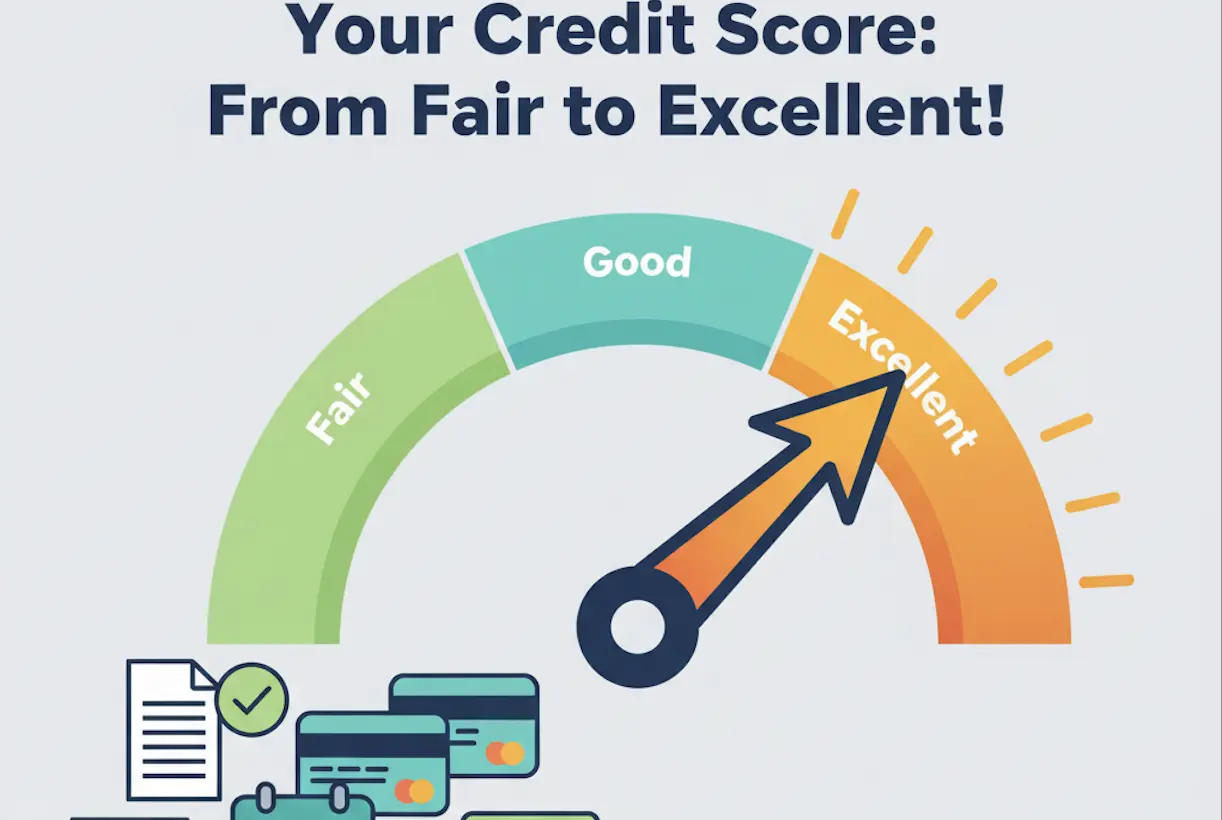
Want to level up your credit score in 2026? Here’s the quick version before we dive deeper: pay on time, use less credit than you’re offered, keep your old accounts open, and don’t chase every shiny new card offer. Sounds simple, but each move carries serious weight in how lenders—and life—judge your financial trustworthiness.
What Is a Credit Score, Really?
Your credit score is like your financial GPA—a three-digit summary (usually between 300 and 850) that tells lenders how risky or reliable you are.
Think of it as your “trust meter.” The higher it is, the more likely banks, landlords, or even job recruiters say, “Okay, this person’s got their money act together.”
The big three credit bureaus—Experian, Equifax, and TransUnion—each have their version of your report, powered mostly by FICO® and VantageScore® models.
How Credit Scores Work in the U.S. (2026 Edition)
As of 2026, credit scoring remains mostly consistent—but a few key updates are worth knowing:
- Medical debt under $500 will continue to be excluded from credit reports (thank you, CFPB).
- Buy Now, Pay Later (BNPL) services like Klarna or Affirm are starting to show up on credit files—so those impulse purchases? They now matter.
- UltraFICO and Experian Boost still let you add things like utility or rent payments to your profile—helpful if you’re new to credit.
In short, 2026 is all about transparency. Your financial habits are under a brighter, fairer spotlight than ever.
Benefits and Risks
✅ Benefits of a High Credit Score:
- Lower APR on credit cards and loans
- Easier mortgage or auto loan approvals
- Higher credit limits
- Better insurance rates and even job opportunities
⚠️ Risks (and Common Mistakes):
- Closing old credit cards (kills your “credit age”)
- Applying for too many accounts in a short time (hard inquiries = small dings)
- Ignoring small bills or BNPL payments (“micro” debts now matter)
- Carrying high credit utilization (ideally keep it under 30%)
Remember: your credit score doesn’t define you—but it definitely defines your interest rate.
How to Improve Your Credit Score in 2026
Here’s your playbook:
- Pay on time—always. Payment history makes up 35% of your score. Use auto-pay, reminders, or even sticky notes if you must.
- Keep your utilization low. Spend only what you can pay off quickly; aim to use under 30% of your available credit.
- Don’t close old accounts. They help your “credit age” and total available credit.
- Limit new credit applications. Each hard inquiry drops your score a few points temporarily.
- Review your credit report regularly. Use AnnualCreditReport.com (free weekly reports through 2026).
- Mix it up. Having both revolving (cards) and installment (loans) accounts shows balance.
💡 OptipWealth ProTips
ProTip #1: Don’t chase perfection—scores above 760 already get elite rates. Anything higher just wins bragging rights.
ProTip #2: Set your card payment due date right after payday. Simple trick, fewer missed payments.
ProTip #3: If you’re rebuilding, ask for a credit limit increase instead of opening a new card—it helps utilization without more hard pulls.
ProTip #4: Use apps like Experian Boost or UltraFICO to get credit for bills you’re already paying on time.
FAQs
Q: How often does my credit score update?
Usually once a month when lenders report activity. Some services update weekly.
Q: Does checking my credit score hurt it?
Nope. Soft inquiries (like checking your own score) don’t impact anything.
Q: What’s a “good” credit score in 2026?
Generally, 670–739 is good, 740–799 is very good, and 800+ is excellent.
Q: Can I remove errors from my report?
Yes. File a dispute with the bureau—by law, they must investigate within 30 days.
Q: How long do negative marks stay?
Most drop off after 7 years, though bankruptcies can linger up to 10.
Conclusion & Call to Action
Your credit score isn’t fixed—it’s more like your financial health meter, constantly updating as you make (or skip) smart money moves. 2026 is the year of transparency and control, so treat your credit like a long-term investment, not a one-off fix.
Ready to see how your credit habits could boost your score?
Try our free OptipWealth Credit Score Simulator and see the math behind your next big financial win.